
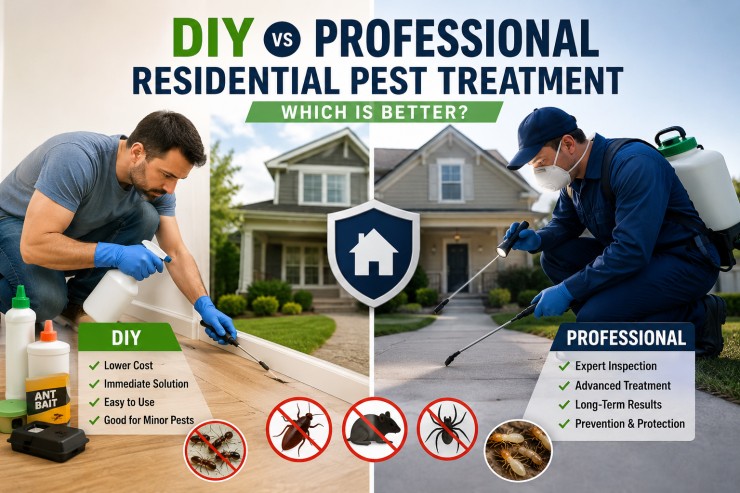
DIY vs Professional Residential Pest Treatment Guide
Pests are the most recurring complaint reported to most pest control companies in Australia. Whether it is ants invading kitchen cabinets, spiders congregating on windows, cockroaches scampering across walls, or termites eating away at your home’s foundation, pest activity can be difficult to combat and control. When they see pests, homeowners are more likely to confront the question of whether they can handle the problem themselves or whether they should hire a professional. Over-the-counter pest products are easy to find, and they may appear to be a quick and cheap fix. Conversely, expert pest control companies provide professional know-how, more powerful treatment options, and perseverance in preventing and hunting down pests in your property. Which is the best option varies depending on pest species, level of infestation, the expectations of the consumer on budget, and desired time to results.
Choosing between DIY options and professional treatment for your home’s pest problem is a “Pros and Cons” guide to aid the homeowners to decide better and shield their property more efficiently.
Understanding Household Pest Problems
The nature and activities of household pests vary quite a bit, and their proper treatment needs to be specific to each species. Some pest problems are quite small and can be dealt with immediately, while others may get so big that their owners don’t even notice. Ants cockroaches spiders rodents silverfish, and termites are the most common pests causing problems in Australian homes. The reproduction of these pests is so fast that one day a house can be clean and the next day a whole colony is running around. Besides the speed at which their population grows, their number also depend on factors like the weather rains the availability of food and shelter, and even the way the house is built.
Good home pest control calls for first knowledge of the pest and the things that attract it. Also, killing the insects you see might not get rid of the issue entirely, as there could still be nests and breeding areas. Determining the most suitable treatment method early on can help to avoid not only recurring infestations but also more expensive problems in the future.
What DIY Pest Treatment Includes
DIY pest control is simply the treatments that homeowners do themselves, buying the products from a store or a home improvement company. These products may be in the form of sprays, bait stations, powders, traps, or preventive household care. Numerous individuals opt for DIY methods as they are more convenient and entail lower initial costs. Simple household pest control may include proper food storage, sealing all visible points of entry, eliminating moisture, and applying pest-specific products where needed.DIY treatment can be effective when activity is low and detected early. But the results are very much dependent on knowing what treatment to use and how to use it. In some cases, aerial pests temporarily disappear while the subterranean infestation rages elsewhere within the home.
Benefits Of Professional Services
Professional pest control experts respond to infestations in ways that are entirely different from DIY methods. They do more than concentrate on the pests that are visible but actually check the environment around, identify the entry points of the pests, locate nests, and also recommend ways to prevent future problems. Generally, a professional treatment plan for residential areas comprises inspection, targeted extermination, follow-up monitoring, and providing advice aimed at reducing future pest problems. In fact, this system is quite effective for deeply rooted infestations and hard-to-find pests like termites and rodents, etc. Pest control professionals also employ tools and techniques that are not commonly accessible to homeowners. One of the key advantages is accurate pest identification. Most of the time, misidentification of pests causes wasted efforts and recurring expenditures. A specialist inspection not only makes the work more efficient but also allows the owners of the house to fix the root causes instead of merely the signs.
Comparing Cost And Value
Cost is important in the choice between DIY and professional pest control. Cost is obviously a factor in the DIY versus professional pest control choice. Still, repeated purchases and failures can add up over time. Professional services often have a higher upfront cost, but could end up giving you more value soon by effectively dealing with the pest problem so they do not come back and preventing any further damage.
DIY vs Professional Comparison
| Factor | DIY Treatment | Professional Treatment |
| Initial cost | Lower | Higher |
| Convenience | Immediate purchase | Scheduled visit |
| Long-term effectiveness | Variable | Generally stronger |
| Pest identification | Limited | Professional assessment |
| Preventative advice | Minimal | Comprehensive |
For many households, value depends less on initial price and more on achieving lasting results.
Safety And Long-Term Results
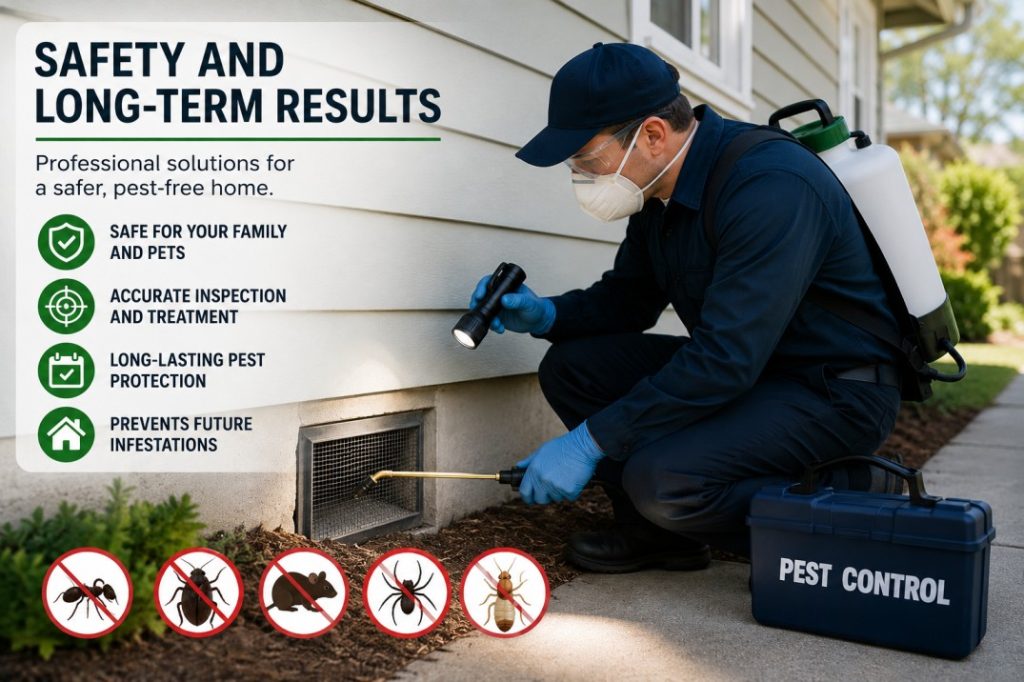
Safety is always a consideration that should be kept in mind when choosing any option for control of household pests. While over-the-counter products are convenient to obtain, misuse can lead to decreased efficacy or increased risk of exposure for household members and pets. Professional providers typically follow regimented treatment plans, and they do let you know what you need to do post-treatment to help more safe outcomes. There are also differences in how well they will last over time. DIY treatments are often aimed at a short-term suppression of the pest, whereas professional home pest control services address the conditions in the home’s environment that lead to repeated pest activity. In a combined treatment and prevention approach, the homeowner is most likely to experience fewer repeat infestations and the best long-term control.
When DIY Makes Sense
There are still some situations in which DIY pest control can work. Small pest problems, short-term insect activity, and the usual upkeep around the house are often things you can do yourself without calling a professional. If the activity is scarce and you can easily find the source of a pest problem, then consistent household management can allow a homeowner to do well.
Household Prevention Schedule
| Prevention Task | Suggested Frequency |
| Clean food preparation areas | Daily |
| Empty bins | Regularly |
| Seal visible gaps | Monthly |
| Inspect moisture areas | Monthly |
| Check outdoor surroundings | Seasonally |
Upkeep of these practices may also minimise the conditions that invite pests in the first place, and reduce the likelihood of recurring treatments.
When Professionals Are Better
There are cases in which it is easier to seek professional pest control assistance when infestations become difficult to manage or continue to return despite treatment efforts.. Repetitive infestations, growing pest populations, unseen activity, structural damage, and failed do-it-yourself attempts are usually signs of a more complicated situation. Residential pest treatment professionals will become particularly useful when the pests begin to converge in large numbers despite your efforts to treat your home or when the activity goes into the walls, ceiling, and other places you simply cannot reach. Termites should receive special attention, because damage may develop long before warning signs are evident. Professional service inspectors can also detect conditions that place your home at risk, thus helping to deter future infestations as opposed to simply responding to current ones.
Final Thoughts
Deciding on whether to go the DIY or professional route in pest control isn’t usually a clear-cut choice. DIY is a great option for minor pest activity and routine prevention, and it’s convenient and easier on the wallet upfront. However, when applying professional residential pest control to concealed infestations, recurrent infestations, or major pest problems, it can provide much better value for your money in the long run. For quite a few Aussie families, the best and most balanced way is straightforward home prevention with a bit of pro help from time to time. And if you do the work properly from the beginning, you will be saving yourself both money and headaches, and it will be easier to keep your home clean, safe, and cozy.