
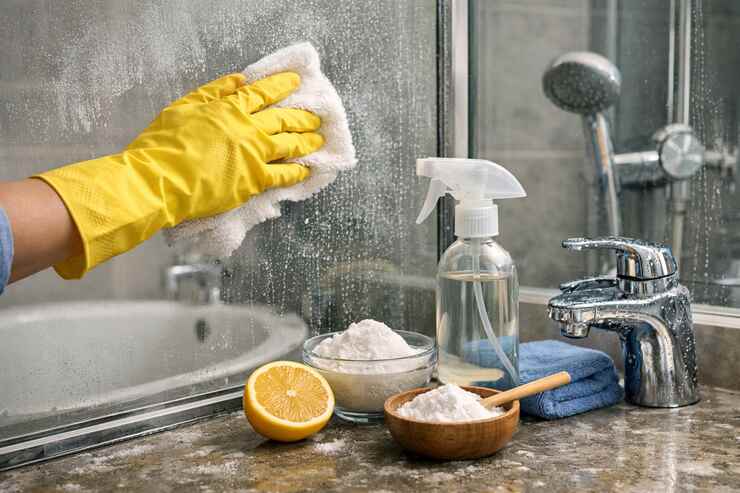
Have you ever gone to the bathroom mirror and glass shower room and wondered to yourself, why does it seem to be cloudy despite being clean? It is due to the stains of hard water. These stubborn white or chalky marks are occasioned by the mineral deposits, which are mainly calcium, magnesium and left behind by the evaporation of water. They are tightly adhered to glass, taps, showerheads and other fittings, making them look dull and not maintained.
The fact is that, however, with the right approach, these stains do not need to be permanent. One can regain the shine with the help of a few ingenious cleaning tricks without damaging the surface. This blog explains some practical, simple and effective measures to remove hard water stains on the glass and the fixtures and prevent the same occurrence.
1. Knowing the Real Stains of Hard Water
Before addressing the issue, it is useful to know it, as per cleaning professionals. There are dissolved minerals in hard water. The droplets that are left to remain on glass or fixtures and dry up leave behind small mineral crystals. With time, they accumulate into cloudy segments, rings or crusty layers. It is also hard to wipe regularly, as the longer a stain is on the more it sticks to the surface. The awareness of this reason is why it is important to clean fast and why wiping with something simple does not always work.
2. Begin with Mild Cleaners First
Always begin gently. Fresh mineral deposits may be raised with a prescription of a non-detergent solution of warm water and a small amount of mild dish soap, a method often recommended by a bond cleaning expert. Put several drops of dish soap in water, moisten a microfiber cloth and wipe the affected part. This will eliminate dirt on the surface and soap scum, hence the deep clean is easy. It is easy to work too hard at the start and scratch the glass or destroy chrome finishes, so just take your time.
3. Vinegar, Use as a Mineral Dissolution
One of the best remedies in case of hard water marks is white vinegar which is economical too. It is slightly acidic, thus dissolving mineral deposits without the use of harsh chemicals. Wet a paper towel or cloth with undiluted white vinegar and apply it to the stained area and leave it there for 10-15 minutes. In case of vertical glass, spray vinegar and leave it as it is. Some soaking must be done, then scrub with a soft sponge or a brush. Wipe using clean water and dry it.
4. Use the Baking Soda on Stubborn Spots
The baking soda may be utilised in situations when the stains are difficult to remove. Ready a paste of vinegar a little water and baking soda. Apply it to the stain and leave it on for the same several minutes. Then wipe off lightly using a soft cloth or non-scratch pad. The fine consistency of baking soda is a mild form of abrasion, which blends the mineral deposition without scratching into the skin, resulting in deep lines. Use a lot of caution when working with delicate finishes, and rinse with a lot of water after that.
5. Lemon Juice to Shine and to Freshen
Another natural acid that pierces through the layer of minerals, leaving behind a fresh fragrance, is lemon juice. Rub lemon halves directly on taps, handles or glass surfaces, or apply lemon juice in a bottle by way of a cloth. Allow to dry a little and then run under some water and dry. Lemon is also an aid in eliminating bad smells and specifically in giving a shine to things. This is particularly beneficial to bathrooms in need of cleaning and maintenance.
6. Hire Commercial Cleaners on Demand
In case of failure of the natural solutions and the existence of stains that are months old, the use of specialised hard water removers may be applied. When they are searching for products, look at those which are marked as limescale or mineral deposit cleaners. Always adhere to label instructions, always put on gloves and ensure proper ventilation. Do not confuse goods or use them together with bleach. It is advisable to apply the cleaner on a small piece first to make sure that it does not leave glass coating or finish on the fittings.
7. Showerheads and Faucets Pay Attention
Hard water usually accumulates in fixtures, lowering the flow of water. Showerheads: soak in vinegar for an hour to loosen up the internal deposits of minerals. In the case of fixed faucets, wrap them with a vinegar-filled plastic bag on the head and leave it for some time. When it is wetened then clean the nozzles using an old toothbrush and run water to clear the blockages. This enhances the water pressure and cleanliness simultaneously.
8. Prevent Now, Don’t Struggle Later
Hard water stains are best prevented and dealt with by simply preventing their formation. Wipe glass and fixtures after using in showers or sinks using a microfiber cloth or squeegee. This will avoid the formation of droplets. Stains may be frequent and severe. In this case, it is a good idea to install a water softener. Liquid soap is also better than bar soap as it does not leave behind residue since bar soap interacts more with minerals. Light cleaning is better than heavy cleaning.
9. Wipe Surfaces Properly After Cleaning
Most individuals are very good at expert cleaning, but they leave out the last and most important task, which is drying. The fact that leaves surfaces wet encourages new minerals. Rinse, dry with a dry microfiber cloth, glass, tabs and handles. This makes them shine and retards the growth of the stain. Streaks and dots are also avoided through drying, and hence, the cleaning process is worth it.
Conclusion
Hard water spots are not impossible to overcome, but it may be a challenge. Noticing the reason, selecting an appropriate cleaning technique, and adhering to preventive measures may change the murky, spotted glass and stained fixtures into glossy ones once again. Glass doors, mirrors, taps and showerheads can be kept clean and shiny with a smart, mindful cleaning and constant care, without the frustration, heavy scrubbing, and just simple smart cleaning. while steam cleaning upholstery also helps maintain overall home hygiene.