
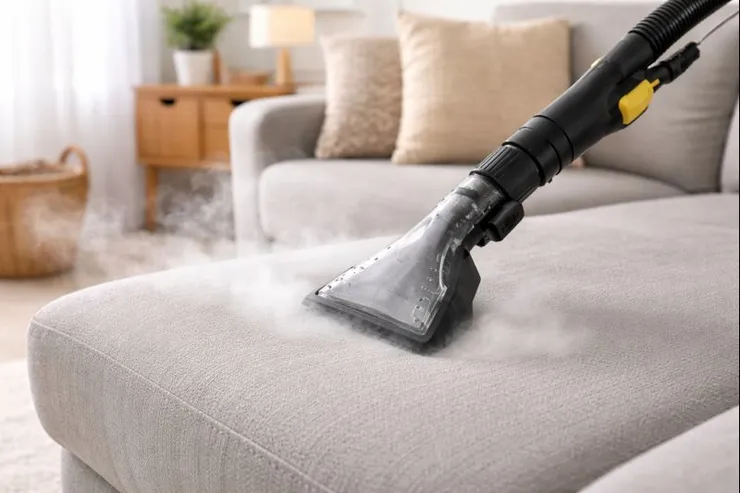
Steam Cleaning Upholstery – Bring Your Furniture Back to Life
Have you ever had a glance at your own sofa or favourite armchair and wondered why it no longer smells fresh and looks beautiful, and starts gathering stains, dust and smells? One of the most utilised and least considered items in any house is upholstered furniture, and over time even regular vacuuming is not enough, which is why help from a bonds cleaning service or steam cleaning becomes important. Even though it will help, deep-rooted dirt is not necessarily removed by frequent vacuum cleaning. And there is steam cleaning.
A steam cleaner is a chemical-free mechanism of cleaning that is extremely potent and is applicable in freshening and restoring the appearance of upholstery and improving the quality of indoor air. It is possible to clean your furniture and safely extend its life with the help of the right methods. We shall focus on the best suggestions on how to use a steam cleaner to clean upholstery with a lot of success and feeling of safety.
1. Look at the Upholstery Tag First
It is always important to look at the manufacturer’s label of your furniture before expert cleaning it using the steam cleaner. Upholstery labels normally consist of codes that refer to cleaning methods that are safe. W or WS signifies that it can be cleaned using water, and therefore, steam cleaning is appropriate. Nevertheless, a solvent-only cleaning is denoted by the label, which is S. Failure to follow these instructions may cause clothes to shrink, their colour to bleed away or even be permanently damaged.
2. Quickly Vacuum Before Steam Cleaning
The use of steam cleaning should not be the initial procedure. Before the application of steam, there should be no loose dirt, dust, crumbs or pet hair. Vacuum the upholstery with an upholstery attachment, giving special care to the seams, crevices, and corners. Pre-vacuuming will prevent the conversion of dirt into the muddy residue when it is in contact with moisture and will provide more efficient cleaning as a result of steam cleaning.
3. Test Steam on a Hidden Area
Although upholstery may be tagged as steam safe, it needs to be tested. Select a small and concealed area, e.g. the back or underside of a cushion, and use some steam. Let it dry thoroughly and look at it to see whether it has faded colour, or changed texture, or has marks of water. It is a measure to keep you out of the way of visible harm, and is a source of confidence before you set about cleaning up the whole of it.
4. Insert the Right Steam Cleaner Attachment
The majority of steam cleaners have purpose-made attachments which are aimed at upholstery. Select a fabric or upholstery nozzle which releases the steam in a steady and gentle manner. High pressure or narrow nozzles are not good because they may plunge excess moisture into the cloth. The right attachment assists in lifting dirt, and the fragile fibres are not destroyed.
5. Work in Small Sections
The steaming process of cleaning upholstery is a process in itself. Break down the work and work in small segments instead of steaming the whole sofa at once. Clean the fabric slowly with the steam cleaner so that the heat can help loosen the dirt and stains, but will not overdo the area. Excessive steaming may result in longer drying durations as well as more susceptibility to mould or mildew.
6. Do not Wet the Fabric Too Much
Excessive use of moisture is one of the most common errors on steam cleaning of upholstery. Padding and the upholstery foam could absorb a lot of water and require a significant amount of time to dry. It is the unwanted moisture that will result in unpleasant odours and even the destruction of the inside structure of that furniture. Turn on bursts of steam and wipe the area immediately with a clean and dry microfiber cloth in order to absorb the loosened dirt and excess moisture.
7. Target Stains and High-Traffic
Armrests, seat cushions and headrests have the greatest amount of dirt and oils. Take more time over that, but do not be hard. When dealing with stubborn stains, use steam, but do not scrub; use blotting with a cloth. Scrubbing will destroy fibres and make the stains more extensive on the cloth.
8. Allow Proper Drying Time
Cleaning is not significant without proper drying. However, when steam cleaning is done, the room should be well-ventilated either by opening the window or using fans. One should not sit on the furniture until it is totally dry. Drying can be a matter of many hours, depending on the type of fabric to be dried and the amount of water in the air. Premature sitting causes flattened fibres and reintroduction of dirt.
9. Apply Steam Cleaning as a Regular Maintenance Procedure
Steam cleaning can not be a performed routine process; however, it is a good complement to your upholstery cleaning schedule. The majority of families can afford to steam clean their homes four to six times a year. It will mean cleaning the spots immediately after the steam sessions and having your furniture pieces look nice and last longer if you vacuum them and clean them often.
10. Learn When to Use Experts
Although home cleaning by steam cleaning can be used in routine cleaning, highly dirty, sensitive or antique upholstery can be dealt with by cleaning professionals. Specialised methods and commercial equipment are employed by the professionals to clean delicate fabrics safely. When stains are not removed or the fabric is worn out, it is usually safe to get professional cleaning.
Conclusion
Steam cleaning is a powerful, environmentally friendly approach to cleaning upholstered furniture and removes the dirt of the latent nature, and improves the overall cleanliness of the house. Reading fabric tags, vacuuming, attaching the right attachments, and avoiding the formation of more moisture will be the activities that will guide you in achieving professional level work in your home.