
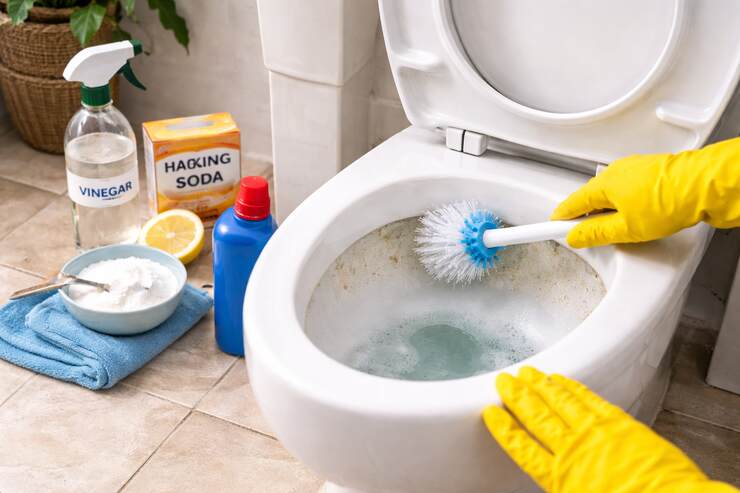
Have you ever opened the lid of your toilet just to discover that there are certain stains which could not be washed off and are stubborn, which are white or brown in colour? It is a home problem because of the limescale formation, which is mainly observed in places where hard water is found. Not only do these chalky deposits make your toilet appear dirty, but also have the ability to harbour bacteria and cause nasty smells in the long run. Most individuals have been experimenting with cleaners but unfortunately, most of them do not work, thus the stains recur.
The positive side is that the limescale can be handled with proper methods and regular treatment. With the knowledge of how to make it go away and the application of good cleaning methods, you are able to bring your toilet shine again and avoid future accumulation without ruining the surface or using very harsh cleaning agents.
1. Define What Causes Limescale
It is the hard water that is the cause of the limescale and it is retentive of minerals like calcium and magnesium, as per cleaning professionals. The deposits of these minerals in the form of chalky white articles occur when water occupies the bowl of the toilet and gradually evaporates. As time passes, the accumulation will be thick and even brown due to the incarceration of dirt, rust, as well as bacteria. Sometimes it encircles the waterline, beneath the rim, and at the base of the bowl. It is important that the cause is found as it is only possible to treat the limescale by dissolving the deposits of minerals and not scrubbing the surface.
2. Toilet Preparation Before Cleaning
The preparation of cleaning is a very important aspect. Reduce the amount of water within the bowl before adding any solution. Install a water supply valve and flush the toilet and clean up the extra water with the help of a sponge or a small container. This makes the cleaning product not to be diluted and also makes contact with the limescale deposits directly. It is also advisable that you wear rubber gloves to cover your hands in the process.
3. Vinegar Should be Used in Mild to Moderate Builds
One of the best natural solutions for the removal of limescale is white vinegar. It is acidic and thus it disintegrates the mineral deposits without breaking porcelain. Pour two to three cups of vinegar into the bowl of the toilet, and make sure that it covers the stained areas. Allow to rest at least one hour. To get better results on more stubborn stains, a night time leave would be better.
4. To Add More Cleaning Power, Add Baking Soda
In order to increase the performance of vinegar, add 1 cup of baking soda upon pouring the vinegar into the bowl. The efflorescent reaction of the two components assists in raising and loosening the hard deposits. Allow the mixture to rest further 30 minutes and scrub. The hybrid one is eco-friendly, cheap, and suitable to be serviced on a routine basis. It is especially efficient with a middle-range accumulation, which is yet to form thick crusts.
5. Light Stains: Try Lemon Juice
Lemon juice also contains naturally available citric acid that will dissolve light limescale stains and will make your toilet fresh. Take fresh lemon juice and apply it to the affected areas, and leave it to dry for one to two hours. Scrub gently and flush. Lemon juice is not very strong and this is why it does not accumulate heavily; however, it is a good preventive agent and it leaves a fresh smell behind.
6. Commercial Descaler: Heavy Deposits
A commercial toilet descaler may be needed to deal with stubborn and thick limescale that cannot be eliminated with natural remedies. These products are specially designed to dissolve the mineral deposits in a short duration. Always check the instructions of the manufacturer and leave the purchase to rest during the required time, then scrub the product and flush it. Do not use descalers with bleach or other expert cleaning agents, as this can result in fumes which are dangerous. When handling chemical cleaners, ensure that the place is well ventilated.
7. Wipe Stubborn Stains Using Pumice Stone
Where the limescale has not yet softened at the bottom of the bowl, a pumice stone, which is safe in the toilet, might do. Wet the pumice stone and the top of the toilet also and gently rub the stained area. It should always maintain the surface wet; it will cause scratches. Light pressure should be used and one should work gradually till the deposit starts lifting. This process is particularly important with thick mineral rings that are not easy to treat using chemicals.
8. Stop the Comeback of Limescale
It is always easier to prevent than cure. Wipe your toilet once in a week in order to eliminate hardening minerals. Adding one cup of vinegar to the bowl once a month and allowing it to soak for one hour and then flushing the bowl can assist in dissolving early deposits. When hard water has been a chronic problem in your house, one of the possible solutions is to install a water softener to help limit the amount of minerals deposited, not only in toilets, but also in taps, showers and devices. For deeper cleaning and long-lasting results, you can also explore our remove water stains service to effectively eliminate stubborn hard water marks from bathroom surfaces and fixtures.
Conclusion
There is no need to have complicated procedures to get the limescale off the toilets, however, one should work and be patient. Regular maintenance is a mandatory aspect whether it is a natural or powerful commercial descaler, like vinegar and baking soda. Through appropriate preparation, the appropriate knowledge of the cause, and the appropriate action, one can keep his/her toilet clean, maintain its hygiene, and prevent the development of mineral stains in the long run.